– by Wood Institute travel grantee Dr. Edward Allen Driggers*
Historians take for granted the ways in which the profession produces knowledge. Usually historians construct a question from the historiography or primary sources that they encounter. I think occasionally, though, Clio speaks and we are inspired. I recently completed one of the most dynamic years of my life: my daughter was born into the world, I completed my Ph.D. in the history of science, and I completed my first year on faculty in the history department at Tennessee Technological University. My recent research trip to the Historical Medical Library at the College of Physicians of Philadelphia did the same thing for me that it did in 2014 under my first Wood Institute travel grant: it allowed me to be quiet and let the muse speak. It was inspiring.
This past June, I experienced what many rare book librarians only dream of – I was accepted at Rare Book School, also know as Summer Camp for Book Nerds. Rare Book School (RBS) was founded in 1983 by Terry Belanger to enhance the study of books across multiple disciplines and fields. Today, RBS offers over 60 courses at multiple locations, with the main hub being at The University of Virginia.
I was accepted into the most competitive class at RBS: The History of the Book, 200-2000 taught by John Buchtel, Head of Special Collections at Georgetown University, and Mark Dimunation, Chief of the Rare Books and Special Collections Division at the Library of Congress. The course promised a survey of printing methods and the evolution of the book, and the cultural impact of both. The course also provided a strong list of vocabulary words and phrases that all students who wish to stay in the field should know. I received my master’s degree a little more than a year before attending RBS, and in my current position as Reference Librarian, I find myself working with scholars from all over the world, all of whom have multiple perspectives on books. This course seemed promising.
The year 2017 marks the centennial of the United States’ entry into World War I. In memory of those Fellows of the College of Physicians of Philadelphia who served in times of war, the Historical Medical Library will be creating a geo-referenced digital timeline using the letters and photographs of College Fellow and World War I surgeon George Outerbridge (1881-1967). The collection was donated to the Library in 1972 after they were found by the residents of George Outerbridge’s former home.
– by Wood Institute travel grantee Christine Yao, PhD*
Who among us has not experienced the dreaded throb of cranial pain that accompanies stress and anxiety? Headaches seem to be the physiological manifestation of modern life’s tensions: perhaps more so than aches in any other part of the body, pain in the head symbolically ties together physical, mental, and emotional distresses.[1] In popular culture, headaches are also seen as a particularly female trait – think of the old misogynistic joke about a woman pleading a headache as an excuse to avoid a man’s sexual advances. While acting as humor on the basis of supposed female frailty and sexuality, the alleged headache functions to indicate the inner conflict the woman has between the different demands she faces because of her gender and her will as an individual. Managing these clashing societal demands and personal desires is, as it were, a headache.
Baptista Massa de Argenta, De fructibus vescendis, 1471, Call number 10a 189
In early November 2014 I spent a stimulating morning looking at the medieval manuscripts belonging to the Historical Medical Library of the College of Physicians of Philadelphia. One that particularly caught my interest is a small volume of 80 leaves, each about 155×115mm (6”×4½”), whose main content is a treatise in 27 chapters on edible fruits, from figs and grapes to pumpkins and capers. It was an appropriate acquisition for the College because it discusses each fruit under various headings, giving their general medical and other properties, and their effect on various parts of the body.
The Historical Medical Library, as part of its role with the Medical Heritage Library (MHL), is working on a consortium wide digitization effort, in conjunction with the Internet Archive, to provide scholarly access to the entirety of the State Medical Society Journals published in the 20th century. For an introduction to this project, you can read my previous blog post.
In this post, I would like to explore what I began to discuss at the end of my last post: the application of computer aided text analysis techniques, also referred to as “text mining.” In this second-in-a-series of posts about the MHL project and the possibilities for digital scholarship, I will offer an introduction to some of the core concepts of text mining, as well as some easy-to-use, browser-based tools for getting started without the need for a high level of expertise, or specialized software. There will be a link to some more in-depth resources and processes at the end of this article for people interested in exploring some of these concepts and processes more fully.
Edouard Seguin and educating the “feeble-minded” in the 19th century
Note: Many medical terms used in the past – even through the first half of the 20th century – are words that we find insensitive or cruel today. Like any field of history, it is important to keep in mind the time period in which the texts were written and to not pin our 21st-century beliefs on those of the past. As historians, it is up to us to observe, not to judge.
Students at the Elm Hill Private School and Home for the Education of Feeble-Minded Youth, circa 1893. From Records of the Elm Hill Private School and Home for the Education of Feeble-Minded Youth (MSS 6/013-01), Series 8.6, number 22 (box 61).
What is feeble-minded and what or who classifies an “idiot”? The word “idiot” was originally used as a medical term to describe people with intellectual disabilities, although it is used differently today. Other words that were used to describe people with intellectual disabilities were “imbecile” and “moron.” Doctors used these terms to describe the degrees of idiocy with “idiot” as the most disabled, followed by imbecile, and then moron as least disabled.
How was idiocy classified? Idiocy was classified in many different ways, and there were different types of idiocy. The different types of idiocies included Genetous idiocy, Microcephalic idiocy, Eclampsic idiocy, and more. Many people classified as “idiots” lacked certain brain functions, which could cause loss of hearing, smell, taste, sight, perception, and imitation. Some diseases could also change the size of a person’s head, such as Microcephalus, which causes shrinkage of the head, and Hydrocephalus, which causes the enlargement of the head.
Edouard Seguin was a doctor who stepped out of the box and did something others thought was hopeless: educating the intellectually disabled. Seguin was a 19th-century French-born American neurologist, and the first who founded a school for “idiots” called Seguin Physiological School. His schools were seen in many cities all over the United States, but his first school was founded in 1840 in Paris. He did this because he saw potential in the intellectually disabled and he had a great interest in mental diseases. Seguin’s work taught his students how to feel, smell, and hear different things, and taught them to talk or sign. Seguin founding the first physiological school inspired many doctors in the United States and Britain in the 19th-century to create schools for the “feeble-minded,” too.
Another school for the “feeble-minded” was Elm Hill Private School and Home for the Education of Feeble-Minded Youth, founded by physician Hervey Backus Wilbur in 1848 in Barre, Massachusetts. This school provided many things for the patients, including treatments and company. Different and interesting prescriptions were given to the patients, such as Fluid Extract of fucus vesiculosus, which was used for many things from weight loss to treatments for diabetes. This school didn’t only treat the patients, but also taught creativity in arts and crafts or dancing. Educational schooling was also provided, in the subjects of literature, geography, and arithmetic.
In the 19th century, one could be diagnosed as intellectually disabled as early as birth or due to gradual loss of intelligence. It was believed idiocy could be inherited, and although “idiotic” men and women rarely got married or had children, nearly 20 to 50 percent of “idiots” during the 19th-century were were thought to have inherited their disabilities. Marriages between relatives could create a defected baby even if both parents were healthy. Doctors believed some causes of intellectual disability included the mother going through trauma during delivery, and the mother drinking during the pregnancy. Doctors felt for a mother to prevent an “idiot” child, she needed to be at her best health and relax. The “feeble-minded” could be helped by seeking help from professionals, who would perform a variety of tests or surgeries to diagnose the disability and provide treatment.
The Historical Medical Library holds a variety of resources on the education of the “feeble-minded,” such as the Daniel Joseph McCarthy Papers (MSS 2/348). McCarthy was a doctor who believed that with proper exercise and diet that all “mental deficiency” would eventually go away. Another resource on the education of the “feeble-minded” is the book Leading and Select Cases on the Disabilities Incident to Infancy, Coverture, Idiocy by Marshall Davis Ewell. This book contains many different patient’s medical papers and their diagnoses when they were in school. More resources include other types of discoveries of the mind and mental diseases with pictures and personal diaries.
The links below will direct you to the catalog record or finding aid of the resource listed. Remember to check our library catalog and finding aids – these are only some of the great sources we have about the education of the “feeble-minded”!
We use cookies to ensure that we give you the best experience on our website. If you continue to use this site we will assume that you are happy with it.


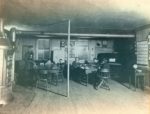
 Records of Elm Hill Private School and Home for the Education of Feeble-Minded Youth
 “The Moral Treatment, Hygiene, and Education of Idiots”