The roots of special education

Edouard Seguin and educating the “feeble-minded” in the 19th century

Note: Many medical terms used in the past – even through the first half of the 20th century – are words that we find insensitive or cruel today. Like any field of history, it is important to keep in mind the time period in which the texts were written and to not pin our 21st-century beliefs on those of the past.  As historians, it is up to us to observe, not to judge.
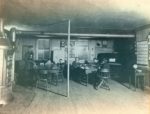
Students at the Elm Hill Private School and Home for the Education of Feeble-Minded Youth, circa 1893. From Records of the Elm Hill Private School and Home for the Education of Feeble-Minded Youth (MSS 6/013-01), Series 8.6, number 22 (box 61).


What is feeble-minded and what or who classifies an “idiot”? The word “idiot” was originally used as a medical term to describe people with intellectual disabilities, although it is used differently today. Other words that were used to describe people with intellectual disabilities were “imbecile” and “moron.” Doctors used these terms to describe the degrees of idiocy with “idiot” as the most disabled, followed by imbecile, and then moron as least disabled.

How was idiocy classified? Idiocy was classified in many different ways, and there were different types of idiocy. The different types of idiocies included Genetous idiocy, Microcephalic idiocy, Eclampsic idiocy, and more. Many people classified as “idiots” lacked certain brain functions, which could cause loss of hearing, smell, taste, sight, perception, and imitation. Some diseases could also change the size of a person’s head, such as Microcephalus, which causes shrinkage of the head, and Hydrocephalus, which causes the enlargement of the head.

Edouard Seguin was a doctor who stepped out of the box and did something others thought was hopeless: educating the intellectually disabled. Seguin was a 19th-century French-born American neurologist, and the first who founded a school for “idiots” called Seguin Physiological School. His schools were seen in many cities all over the United States, but his first school was founded in 1840 in Paris. He did this because he saw potential in the intellectually disabled and he had a great interest in mental diseases. Seguin’s work taught his students how to feel, smell, and hear different things, and taught them to talk or sign. Seguin founding the first physiological school inspired many doctors in the United States and Britain in the 19th-century to create schools for the “feeble-minded,” too.

Another school for the “feeble-minded” was Elm Hill Private School and Home for the Education of Feeble-Minded Youth, founded by physician Hervey Backus Wilbur in 1848 in Barre, Massachusetts. This school provided many things for the patients, including treatments and company. Different and interesting prescriptions were given to the patients, such as Fluid Extract of fucus vesiculosus, which was used for many things from weight loss to treatments for diabetes. This school didn’t only treat the patients, but also taught creativity in arts and crafts or dancing. Educational schooling was also provided, in the subjects of literature, geography, and arithmetic.

In the 19th century, one could be diagnosed as intellectually disabled as early as birth or due to gradual loss of intelligence. It was believed idiocy could be inherited, and although “idiotic” men and women rarely got married or had children, nearly 20 to 50 percent of “idiots” during the 19th-century were were thought to have inherited their disabilities. Marriages between relatives could create a defected baby even if both parents were healthy. Doctors believed some causes of intellectual disability included the mother going through trauma during delivery, and the mother drinking during the pregnancy. Doctors felt for a mother to prevent an “idiot” child, she needed to be at her best health and relax. The “feeble-minded” could be helped by seeking help from professionals, who would perform a variety of tests or surgeries to diagnose the disability and provide treatment.

The Historical Medical Library holds a variety of resources on the education of the “feeble-minded,” such as the Daniel Joseph McCarthy Papers (MSS 2/348). McCarthy was a doctor who believed that with proper exercise and diet that all “mental deficiency” would eventually go away. Another resource on the education of the “feeble-minded” is the book Leading and Select Cases on the Disabilities Incident to Infancy, Coverture, Idiocy by Marshall Davis Ewell. This book contains many different patient’s medical papers and their diagnoses when they were in school. More resources include other types of discoveries of the mind and mental diseases with pictures and personal diaries.

The links below will direct you to the catalog record or finding aid of the resource listed.  Remember to check our library catalog and finding aids – these are only some of the great sources we have about the education of the “feeble-minded”!


Primary sources

docbox-croppedRecords of Elm Hill Private School and Home for the Education of Feeble-Minded Youth
View the full finding aid: Records of Elm Hill Private School and Home for the Education of Feeble-Minded Youth
Call number: MSS 6/013-01


docbox-croppedDaniel Joseph McCarthy papers
View the full finding aid: Daniel Joseph McCarthy papers
Call number: MSS 2/348


docbox-croppedFred B. Rogers papers
View the full finding aid: Fred B. Rogers papers
Call number: MSS 2/354


Secondary sources

book-croppedLeading and select cases on the disabilities incident to infancy, coverture, idiocy, &c.: with notes
by Marshall Davis Ewell, 1876
Call number: Sadoff WA 308 E94L 1876


book-croppedThe mental affections of children, idiocy, imbecility and insanity
by William W. Ireland, 1900
Call number: Ni 143a


book-croppedIdiocy: and its treatment by the physiological method
by Edouard Seguin, 1876
Call number: Ni 50


book-croppedThe backward baby; a treatise on idiocy and the allied mental deficiencies in infancy and early childhood
by Herman Bernard Sheffield, 1915
Call number: Ni 359


Internet sources

PC-Computer“The Moral Treatment, Hygiene, and Education of Idiots”
by Elizabeth Picciuto
From the Ordinary Times blog, 8 April 2012


PC-Computer“The Classifications of Idiocy”
by H. B. Wilbur, 1877
Access provided by the Disability History Museum Library


*Content written by Tina To, Karabots Junior Fellows intern

A Serpentine Arms Race: S. Weir Mitchell, George Halford, and the Most Venomous of Snakes

by Dr. Peter Hobbins*


The title of ‘world’s deadliest snake’ has long been contested, and remains difficult to adjudicate. The criteria are varied, including: 1) the annual human death toll; 2) the innate toxicity of the venom for laboratory animals; 3) the rarity of the serpent, and 4) whether it is a shy or aggressive species. The clinical impact of bites, whether leading to rapid death from respiratory paralysis, awful and extensive ulceration, or permanent disability, tends to be a lower-level consideration – except, naturally, for those who have been bitten.

Until the 1860s, however, it was unclear whether there was any meaningful difference between the venoms of poisonous snakes around the world. Indeed, for centuries it had been presumed that they all possessed the same ubiquitous ‘venom’. The potency of their bites was instead believed to depend largely upon environmental factors, such as the ambient temperature, and especially by the malevolence of the serpent itself. “The cause of the Venom is to be imputed to the Spirits enraged”, wrote French apothecary Moyse Charas in 1670, “and not to any other thing or parts in the Vipers body”.

Read more

Medical Journal Editors Unite

– by Wood Institute travel grantee Jennifer J. Connor, PhD*


A journal has demands that never cease – a perpetual machine, it requires constant attention and lubrication. The metaphor of a machine seems obvious to me – applicable to any small scholarly journal that I have edited, even with the advent of online access – so I was fascinated that early medical journals adopted a ‘life cycle metaphor’ to personify journals as organisms that lived from birth to death. Here, the exhaustion of their “parent-surrogate” editors was seen as the main reason that journals ceased to exist.[1]  I decided to expand my historical research on medical print culture in North America, and the centrality of Philadelphia[2], to learn more about medical editors and the professionalization of that role.

Read more

Bringing Out the Dead: Adventures in Cataloging, Part I

IN WHICH OUR HERO UNCOVERS BURIED TREASURE….
OUR FIRST ADVENTURE TAKES US DEEP INTO AN INTERN’S FIRST EXPERIENCE IN ORIGINAL CATALOGING, MEDICAL SUBJECT HEADINGS, AND THE WONDROUS HISTORY FOUND IN MEDICAL TRADE EPHEMERA.


– by Hend El-Santaricy, Library intern

In my quest to become a more experienced cataloger, I found the internship opportunity at the Historical Medical Library of The College of Physicians of Philadelphia (HML) to be a perfect way to achieve my goal.  My project was to catalog the medical reprints and pamphlets described in this blog.  I started the cataloging process after the collection was initially sorted by another librarian.  This allowed me the privilege of spending all my time cataloging.

I started this internship wanting nothing more than a cataloging experience.  I have had opportunities to work on different collections before.  In every previous experience, I was able to delve into a special relationship with the collection, its history, its use, and its potential.  I knew I could perform my assignment at the HML well but I was not certain, though, if I could build a relationship with a collection about the history of medicine.  I was a stranger to the medical field.

Read more

The Brains of the Operation: Processing the Records of the Office of the Executive Director

by Mary Hanes, Archives intern

The records generated by organizations provide important evidence about the organization’s history and function. In January of 2016, I started to process the College of Physicians of Philadelphia Office of the Executive Director records.  The Director oversees the everyday governance and administration of the College.  This includes overseeing the budget, strategic planning, special projects, and creating and maintaining relationships with other institutions. With so many responsibilities, the office generates a considerable amount of documentation, from correspondence to meeting minutes. The scope of my project includes processing boxes the Library received from the Office of the Executive Director and arranging them to better document the office’s administrative activities and governance duties.

Because the Executive Director’s Office produces so many files, the office keeps active records and sends the inactive files in boxes to the Library. Boxes arrive with varying levels of organization. Recently, the executive assistant to the current CEO requested minutes from a specific committee meeting. Although the material was located, it became clear that the collection needed processing to make it more accessible for current staff and future external researchers.

Read more

Prescribing from the Bookshelf: S. Weir Mitchell and the Therapeutic Value of Restricting Reading

– by Ph.D. candidate Mary Mahoney*


My dissertation focuses on the history of bibliotherapy, or the use of books as medicine. I recently travelled to the College of Physicians to examine the papers of Dr. S. Weir Mitchell, a physician perhaps best known for his invention of the “rest cure” to treat neurasthenia. While Mitchell certainly believed in the therapeutic value of reading in his own life – both reading and writing fiction throughout his career – his reputation has been shaped inexorably by his belief in the therapeutic value of restricting reading as a form of medicine. Neurasthenia was a disease that manifested itself in symptoms that affected the mind and body, including headaches, depression, numb limbs and exhaustion. While Mitchell genuinely believed that restricting reading was vital to resting the body and returning it to health, his female patients felt deprived because reading was a vital part of their lives.

Reading was an act that S. Weir Mitchell understood in bodily terms. Writing in Fat and Blood, his foundational work on the rest cure, he wrote about reading as an act that proved dangerous for bodies suffering from nervous exhaustion. Reading posed a threat for both the strain it placed on a reader’s eyes and the energy it drew from the body. A case study from Fat and Blood details these dangers.

Read more

‘To be buried alive is, beyond question, the most terrible of these extremes which has ever fallen to the lot of mere mortality.’

Cases of being accidentally buried alive date back to the 14th century when the corpse of philosopher John Duns Scotus was reportedly found outside his coffin with bloodied hands. Since then, there have been countless tales of people hearing cries and wails of the dead, longing to get out of their coffins. As recently as 2014, there was a noted case of a woman being buried alive in Peraia, Greece. The woman succumbed to cancer. Not long after her burial, her children heard screams coming from her grave. She was exhumed, and it was discovered that she actually died of cardiac arrest. To the horror of her family, it was discovered that her death occurred after she was in the grave.

The Historical Medical Library has an array of materials that touch on this subject – a subject that was, and is, still a fear to many.
Read more